
Understanding Vaporblasting :
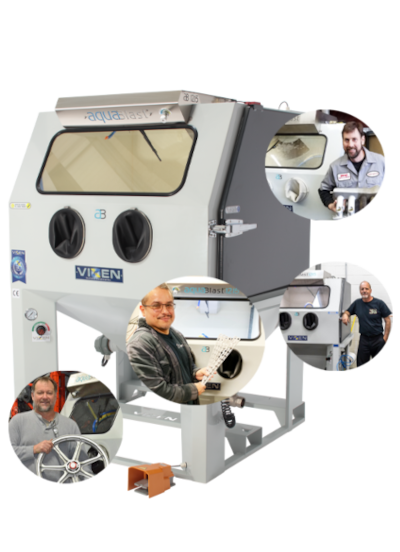
Vaporblasting involves propelling a mixture of water, fine abrasive media, and compressed air onto a surface. Unlike traditional dry blasting methods, vaporblasting utilizes water to cushion the impact of the abrasive particles, resulting in a gentler and more precise treatment. The process effectively removes contaminants, burrs, oxidation, and coatings from a wide range of materials, including metals, plastics, ceramics, and composites.
Enhanced Surface Finish :
One of the key advantages of vaporblasting is its ability to produce superior surface finishes. The combination of water and abrasive media gently abrades the surface, resulting in a satin-like appearance. This uniform and consistent finish is highly desirable for applications that require aesthetic appeal, such as automotive components, jewelry, medical devices, and architectural elements. Vaporblasting can achieve various levels of surface roughness, from a smooth matte finish to a slightly textured look, depending on the desired outcome.
Minimized Material Distortion:
Compared to other surface treatment methods, vaporblasting minimizes material distortion. The water in the process acts as a coolant, preventing the treated surface from overheating and warping. This makes vaporblasting particularly suitable for delicate components and materials that are sensitive to thermal stress. The controlled erosion of the surface ensures that critical dimensions and intricate details are preserved, making it an ideal choice for precision parts and intricate designs.
Cleaning and Deburring :
Vaporblasting is highly effective in cleaning and deburring applications. The abrasive media, combined with the force of the water, efficiently removes rust, scale, dirt, and other contaminants from the surface. Additionally, the process effectively eliminates burrs and sharp edges, enhancing the overall safety and functionality of the treated components. Vaporblasting can be used on a variety of parts, including engine components, molds, tools, and industrial equipment, to ensure optimal performance and longevity.
Environmental Considerations:
From an environmental perspective, vaporblasting offers several advantages. The use of water reduces dust and airborne particles, resulting in a cleaner and safer working environment. Furthermore, the process typically requires less abrasive media compared to dry blasting methods, resulting in reduced waste generation and lower operational costs.
For More Info:-